 blog
blog
Best Blonde Hair Color for Warm Skin Tones
Table of Contents
- How to Tell If You Have a Warm Skin Tone
- Blonde Shades for Warm Skin Tones: Honey, Golden, Caramel and More
- Matching Blonde Shades to Fair, Medium, Olive and Deep Skin
- Can Warm Undertones Wear Ash or Cool Blonde?
- Balayage for Warm Skin Tones: A Lower-Commitment Way to Go Blonde
- How to Maintain Blonde Hair
- Starting Color, Consultation and Realistic Results
- Conclusion: Choosing Your Blonde with Confidence
- Frequently Asked Questions
Last Updated: October 16, 2026
How to Tell If You Have a Warm Skin Tone
The best blonde hair color for a warm skin tone usually sits in the golden, honey, and caramel family, because those shades echo the warmth already in your complexion instead of fighting it.
Think of undertone as a preference guide, not a rule. It narrows the field. It does not lock you out of anything.
Warm undertones are the subtle golden, peachy, or yellow cast beneath your skin's surface. They show up across every skin depth, from fair to deep.
At-Home Checks for Warm Undertones
You can get a useful read on your undertone in about five minutes, using things you already own.
- The vein check. Look at the veins on your inner wrist in daylight. Greenish veins often point to warm undertones; blue or purple leans cool.
- The jewelry test. Hold gold and silver near your face in natural light. If gold makes your skin look brighter and more even, that's a warm signal.
- The white paper test. Hold a plain white sheet next to your bare face. Warm undertones often pull a golden or peachy reflection.
- The sun test. If you tan easily and rarely burn, that often accompanies warm undertones.
None of these tests is definitive on its own. Two or three pointing the same direction is a good sign. Bring what you find to a consultation, where we can look at your skin, eye color, and hair history together.
Blonde Shades for Warm Skin Tones: Honey, Golden, Caramel and More
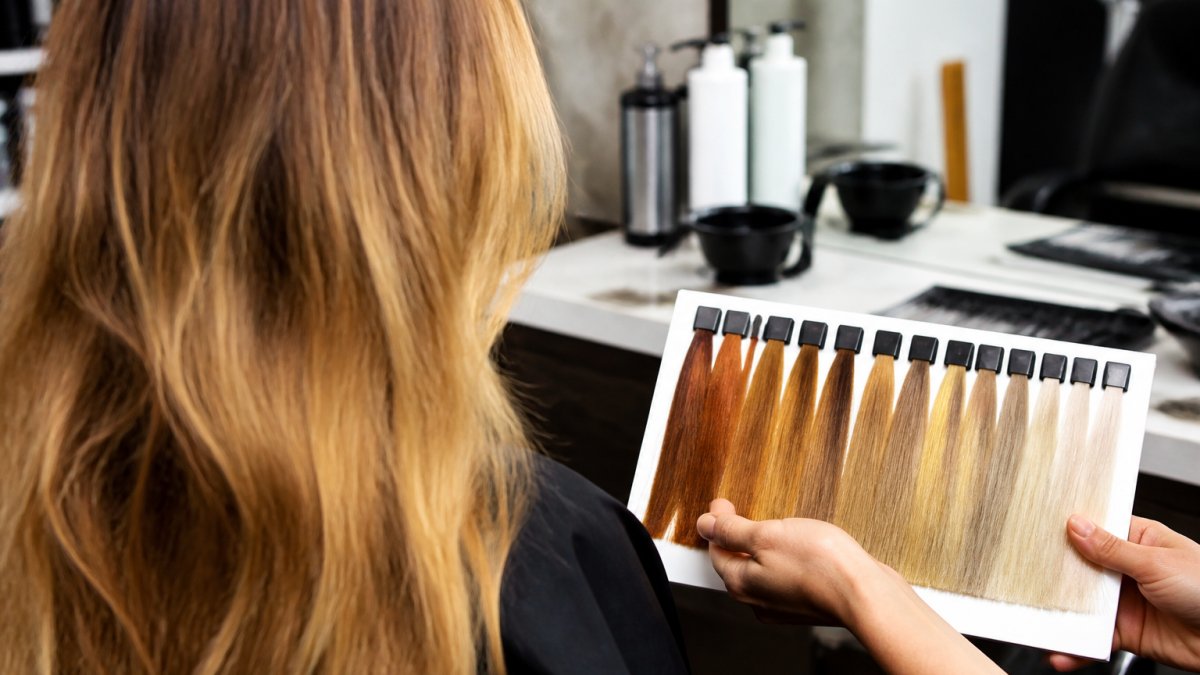
Honey, golden, and caramel blondes are the classic picks for warm complexions, with biscuit and beige blondes as softer, more muted options.
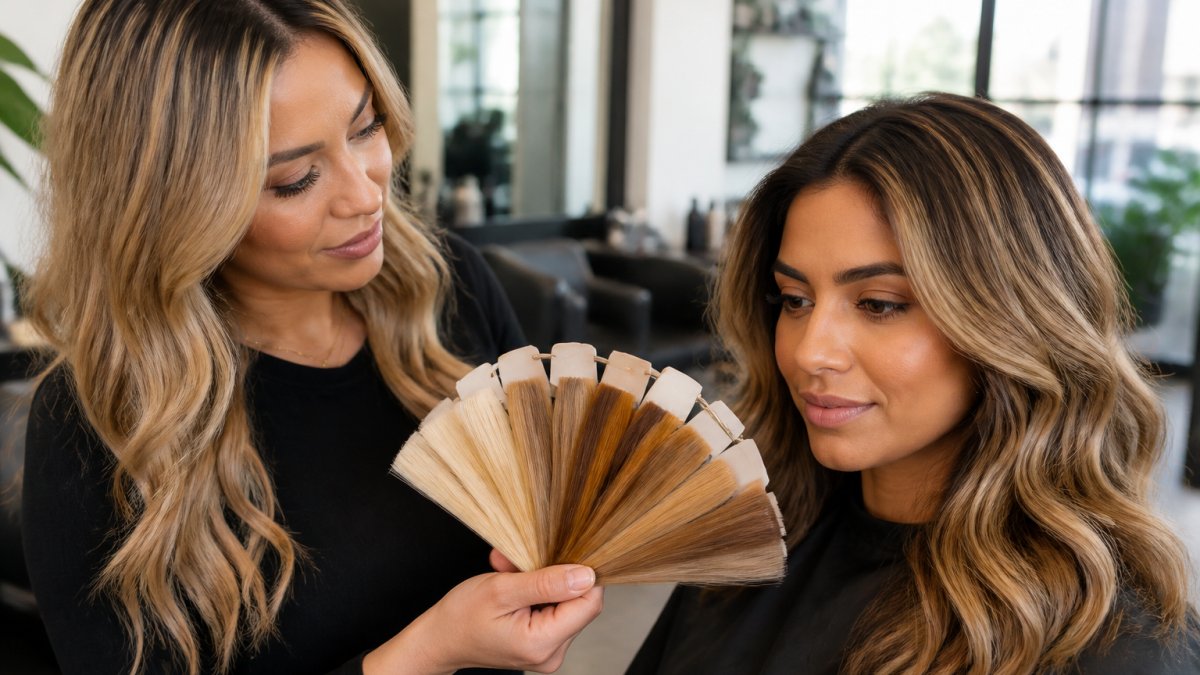
Honey Blonde and Golden Blonde
Honey blonde blends golden and light brown tones into a soft, sun-kissed finish. It sits at a medium depth, so it reads bright without going pale, and it's one of the friendlier entry points if you're moving toward blonde from light brown or dark blonde.
Golden blonde pushes the warmth further. It reads rich and shiny in sunlight and tends to flatter peachy and golden undertones especially well.
Caramel Blonde, Biscuit and Beige Blonde
Caramel blonde sits deeper, with amber and light brown running through it. It's a strong choice for medium and olive skin, and for anyone easing into blonde from a darker starting color, because the depth keeps the grow-out soft.
Biscuit blonde is a soft, neutral-warm shade, think a light beige with a touch of gold. Beige blonde is more muted still, with the warmth dialed down.
Comparing the Warm Blondes Side by Side
| Shade | Depth | Finish | Contrast vs. natural hair | Upkeep feel | Often suits |
|---|---|---|---|---|---|
| Honey blonde | Medium | Soft, sun-kissed | Low to medium | Moderate | Fair to medium skin; first-time blondes |
| Golden blonde | Medium | Bright, shiny | Medium | Moderate | Peachy, golden undertones |
| Caramel blonde | Medium-deep | Rich, dimensional | Low | Lower | Medium and olive skin; darker starting colors |
| Biscuit blonde | Light-medium | Soft, neutral-warm | Low | Lower | Most warm undertones |
| Beige blonde | Light-medium | Muted, low-shine | Low | Lower | Warm undertones wanting a subtle change |
How Eye Color Tips the Choice
Eye color isn't a rule, but it's a useful tiebreaker when two shades feel equally close:
- Brown eyes often pair naturally with caramel and golden tones, which echo the warmth in the iris.
- Hazel eyes tend to sit well with honey and caramel, since both share that green-gold middle ground.
- Green eyes can pop against golden and honey blondes, and can also handle a slightly cooler biscuit tone for contrast.
- Blue eyes often look striking against golden and caramel, and can carry beige or biscuit blondes when the goal is a softer, less contrasty look.
What Changes the Plan
Two people can ask for the same honey blonde and leave with different formulas. The variables that matter most:
- Starting depth. Lifting from dark brown or black takes more sessions and more care than lifting from dark blonde.
- Previous color. Old box dye, henna, or a prior bleach service changes how your hair lifts and how it holds tone.
- Natural warmth. If your hair pulls red or orange when lightened, we plan around that rather than fighting it.
- Hair condition. Fragile or over-processed hair may need a more gradual approach.
If you're torn between two shades, bring photos of both. We can talk through which one fits your hair history and how each will look as it grows out. You can see examples of this kind of work in our gallery, and read more about balayage and color services in Brea.
Matching Blonde Shades to Fair, Medium, Olive and Deep Skin
Skin depth and undertone work together, so the same shade can land differently on two people with the same undertone. Here's how we think about it.
- Fair skin with warm undertones: honey, golden, and light biscuit blondes keep things bright without washing you out.
- Medium skin with golden or peachy undertones: caramel and golden blondes bring out the natural glow.
- Olive skin: caramel and richer golden blondes usually sit best; very pale ash tones can look disconnected.
- Deep skin with warm undertones: caramel, honey, and golden blondes with visible dimension create contrast and shine.
Eye color plays a part too. Brown eyes often pair well with caramel and golden tones, while lighter eyes can carry honey and beige blondes.
Can Warm Undertones Wear Ash or Cool Blonde?
Yes, warm undertones can wear ash and cool blondes. Undertone is a preference guide, not a restriction.
The trade-off is contrast. A cool ash blonde against warm skin creates a deliberate, cooler look that some people love and others find harsh.
If you want to try a cool blonde, we often suggest starting with a cooler toner over a warm base rather than committing to a full shift. You get to see how it reads on you before going further.
Balayage for Warm Skin Tones: A Lower-Commitment Way to Go Blonde
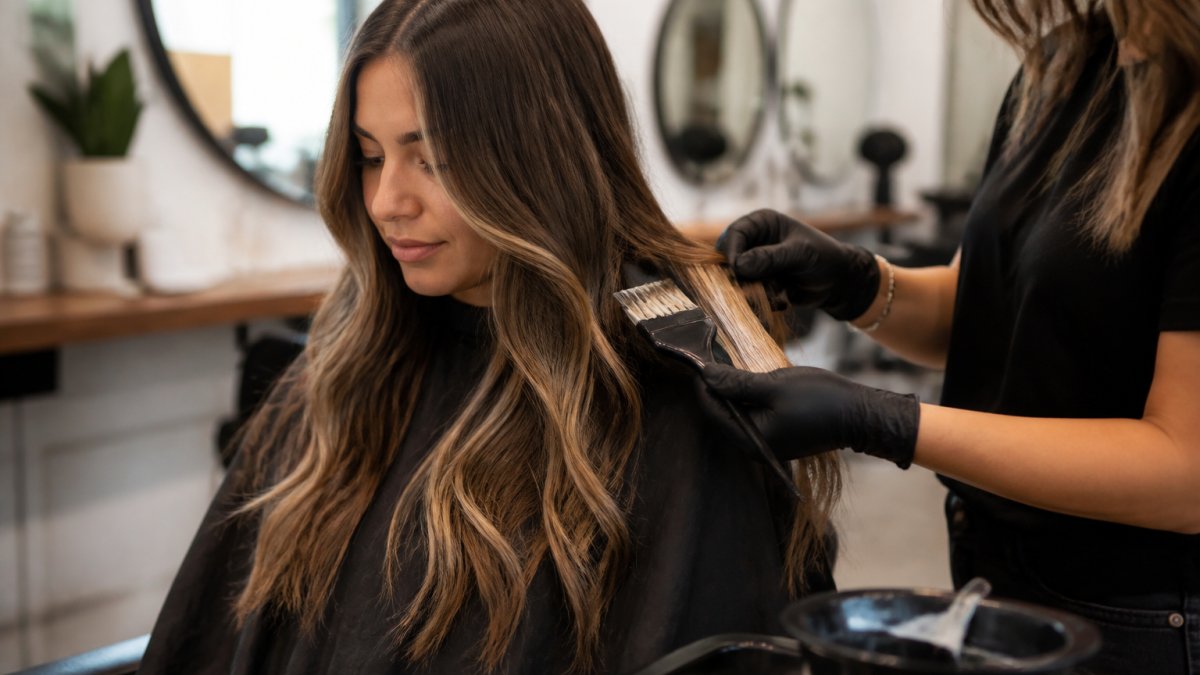
Balayage is a freehand coloring technique that paints lightness through the mid-lengths and ends, leaving your root area closer to its natural color.
Because the root stays softer, regrowth shows less and you're not tied to a strict touch-up rhythm. We can build honey, golden, or caramel tones through the lengths while keeping the overall effect blended.
You can see examples of this kind of work in our gallery, and read more about balayage and color services in Brea.
How to Maintain Blonde Hair
Warm blondes don't fade the way people expect. They don't usually go lighter or darker, they drift. The gold you loved in the salon can slowly turn yellow, then orange, then brassy, as the underlying warmth in your hair becomes more visible and environmental exposure strips some of the tone we applied.
Understanding why that happens makes maintenance feel less like guesswork.
Why Warm Blondes Drift
Three things push a honey or golden blonde off course:
- Underlying pigment. When hair is lightened, it reveals warmth underneath, red, orange, or yellow, depending on how dark you started. That warmth is always there. Tone sits on top of it.
- Sun and heat. UV exposure and hot tools can accelerate fading and shift the tone warmer over time.
- Washing. Frequent washing, hot water, and harsh cleansers strip tone faster than gentle, cooler washes do.
This is why a warm blonde can look perfect for weeks and then suddenly read brassy. It's not a failure of the color, it's the natural pigment reasserting itself as the toner fades.
What Actually Helps
- Color-safe shampoo, used less often. Gentler cleansers and cooler water slow the fade. You don't need a fixed schedule, just notice when the tone starts to shift.
- A toner or gloss when brassiness appears. Catching it early is easier than correcting it later. A quick gloss refreshes the tone without a full re-color.
- Heat and sun protection. A leave-in with UV protection and lower heat settings on styling tools make a measurable difference over months.
- Book a refresh when the tone drifts, not on a calendar date. How often that is depends on your technique, starting color, and how your hair holds tone, some clients come back sooner, some later.
The Box Dye Trap
When brassiness shows up, the instinct is to grab a boxed ash blonde to "cool it down." This usually backfires. Boxed dyes layer new pigment over old, and the result is often darker, muddier, or uneven, especially on hair that's already been lightened. Fixing that takes more work than a simple gloss would have.
When to Say Something
If your color turns brassy faster than you expected, that's useful information, not a complaint. Tell us at your next visit, and we can adjust the formula, the toner, or the technique to hold your tone longer. Maintenance isn't a fixed routine; it's a conversation that gets sharper each time we see your hair.
Starting Color, Consultation and Realistic Results
What you can reach depends heavily on where you're starting. Dark hair, previously colored hair, and hair with a lot of warmth underneath all change the plan.
At a consultation, we look at your starting color, your hair's condition and history, and your goal shade. From there we can talk honestly about what's realistic in one visit and what might take more than one.
If you've had unsatisfactory color elsewhere, bring photos and tell us what you didn't like. That history shapes how we approach your hair.
Conclusion: Choosing Your Blonde with Confidence
Choosing a blonde for a warm skin tone comes down to a handful of decisions: your undertone, your skin depth, your starting color, and how much upkeep you're happy with.
If you're in Brea or nearby and want a shade matched to your hair and skin rather than a generic formula, we'd love to help. Our team specializes in custom color, balayage, and color correction, and we'll walk you through realistic options before we start.
Book a consultation and we'll help you find the blonde that fits you.
Frequently Asked Questions
What blonde hair color looks best on warm skin tones?
Shades with gold, honey or caramel in them usually flatter a warm skin tone because they echo the skin's own golden or peachy undertones. Honey blonde, golden blonde, caramel blonde, biscuit and beige blonde are common starting points. The right pick still depends on your starting color, eye color and how light you want to go, so a consultation is the fastest way to narrow it down.
Can people with warm skin tones wear ash blonde?
You can, but ash blonde leans cool and can look flat or gray against golden or peachy undertones if it is used all over. Many stylists instead place ash tones as accents inside a warmer base, or save them for cooler months. If you want to try ash blonde, we can discuss how the tone might read against your complexion during a consultation.
How does my starting hair color affect going blonde?
Starting color changes both the process and the result. Dark brown or previously colored hair usually needs more lightening sessions than light brown or dark blonde, and any old color in the hair can affect how evenly the new shade takes. A colorist will assess your history and condition first, then map out how many appointments it may take to reach your goal.
How do I maintain blonde hair color between appointments?
Maintenance timing varies by technique, starting color and your goals, so there is no single schedule that fits everyone. In general, washing less often, using color-safe products and avoiding heavy heat styling help the shade last longer. A toner or gloss refresh can keep warm blondes from drifting brassy, and your stylist can recommend an interval based on your specific color.